
Chimney Sealing
What Is Chimney Sealing?
Chimney sealing closes gaps, cracks, and porous joints inside and outside a flue. Because those tiny openings pull in rain and cold air, they raise heating bills and lower fireplace safety. Chimney sealing with modern waterproof products locks moisture out, which means masonry lasts longer and the fire draws better.
Why Chimney Sealing Matters
Water is a chimney’s worst enemy. When rain seeps through unsealed mortar, it freezes, expands, and breaks bricks. Meanwhile, damp crevices rust dampers and liners. Over time, you may smell musty air, see white salt stains, or hear water dripping in the firebox. Eventually, leaks can let carbon monoxide spill back indoors. Therefore, sealing the stack early prevents costly structural and health issues.
Signs You Need Chimney Sealing
- Efflorescence—white, powdery deposits on brick
- Dark streaks or moss on the exterior crown
- Rusty firebox or damper hardware
- A musty odor after wet weather
- Higher energy bills despite the same thermostat setting
If two or more of these warnings appear, schedule a leak inspection soon.
How Pros Seal a Chimney
Step-by-Step Process
- Full sweep and video scan—clears soot and reveals hidden gaps.
- Masonry repair—technicians tuck-point missing mortar and replace loose bricks.
- Waterproof application—they brush or spray a breathable sealant that repels rain yet lets trapped vapor escape.
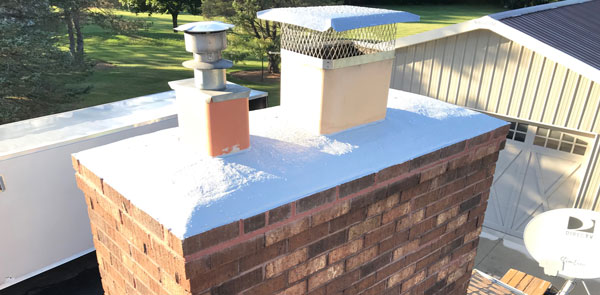
- Crown coating—a flexible, crack-filling membrane stops ponding water on top.
- Cap and flashing check—final seals around metal parts keep driving rain outside.
Because every layer works together, the flue stays dry even during wind-driven storms.
Benefits You’ll Notice
- Lower heating costs—less cold air sneaks down the flue, so the furnace cycles less often.
- Longer masonry life—sealed mortar resists freeze-thaw damage, therefore reducing repairs.
- Cleaner indoor air—tight joints prevent soot stains and back-drafted smoke.
- Greater fire safety—dry bricks mean fewer cracks that could leak sparks into the attic.
Simple Maintenance Tips
In addition to professional chimney sealing, homeowners can extend protection by following these steps:
- Inspect the chimney cap each spring; replace screens with rust spots.
- Clear leaves from gutters so water does not splash back on the stack.
- After major storms, look for fresh stains and address them quickly.
- Schedule an annual chimney sweep; early detection always costs less than full restoration.
When to Re-Seal
Most high-quality sealants last five to ten years. However, extreme weather, settling, or roof work can shorten that life. Consequently, plan for a fresh coat at the first sign of flaking or if you cannot remember the last treatment date.


Chimney Seal Projects
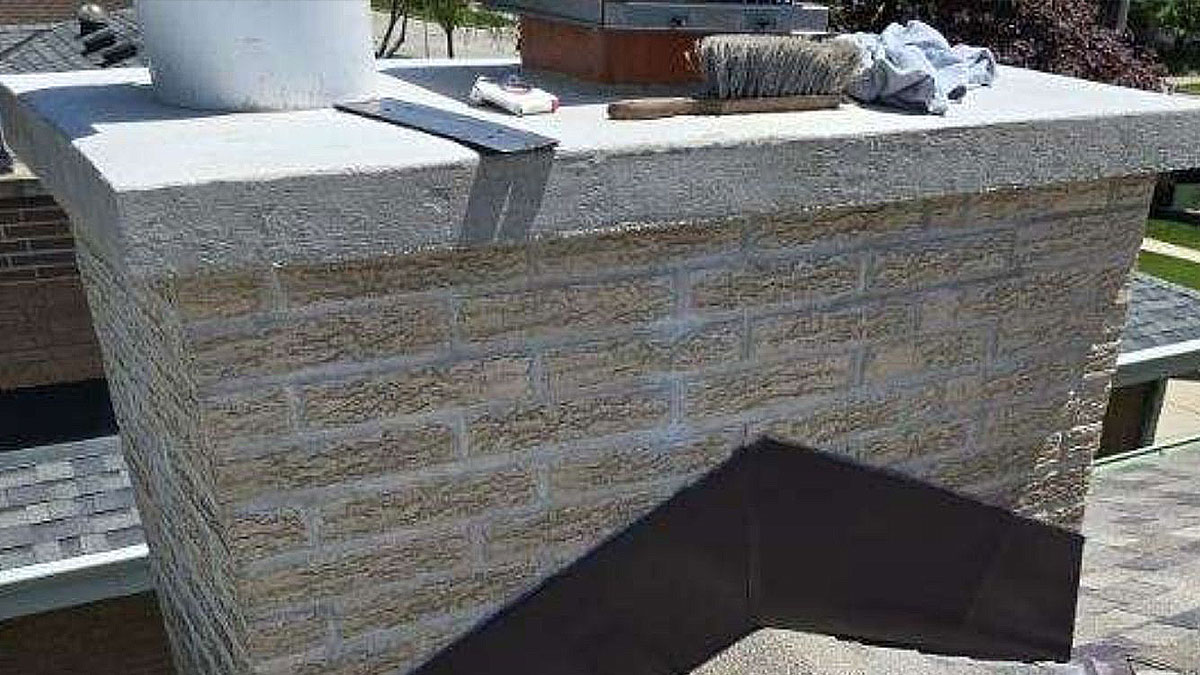
Chimney Crown Coat Installation - West Allis
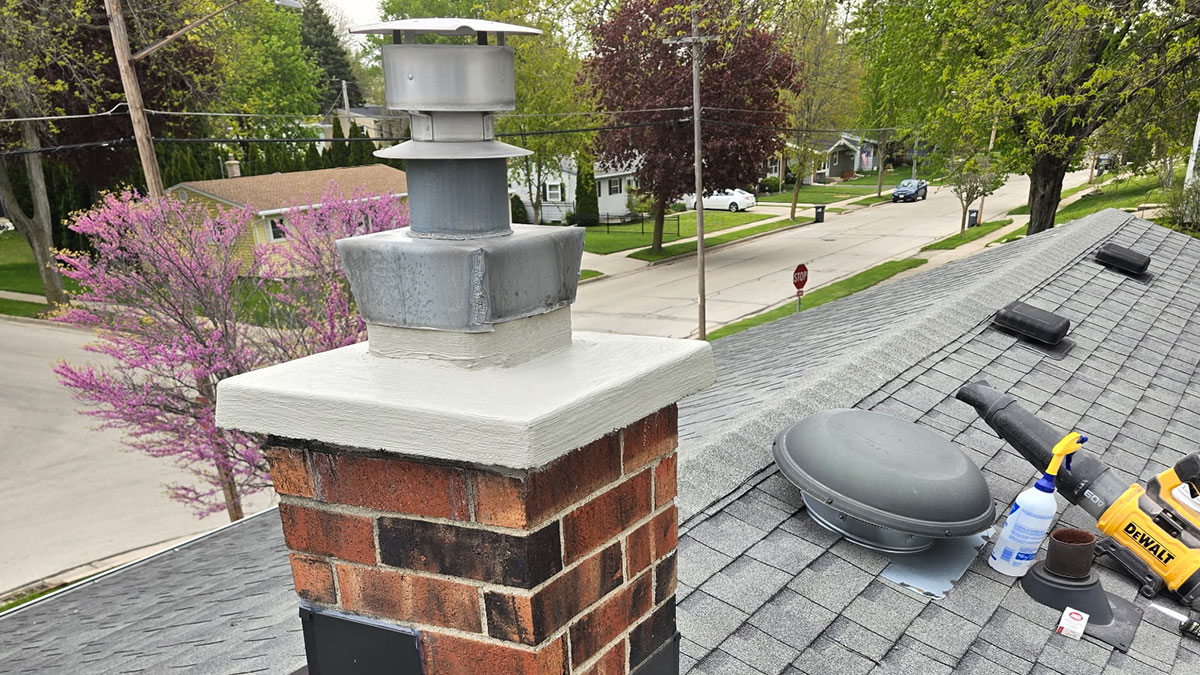
Chimney Crown Coat Installation - Waukesha

Chimney Crown Coat Installation - Sussex

Chimney Crown Coat Installation - Pewaukee
What Fox River Clients Are Saying