Replacing a roof is one of the larger maintenance investments a homeowner may face. When…
How to Know When Roof Repairs Are No Longer Enough
 Your roof protects your home from rain, wind, snow, heat, and other outdoor conditions. Like any part of a house, however, it will eventually show signs of wear. Small problems such as a missing shingle or minor leak can often be addressed with a repair, but repeated or widespread damage may indicate that a more comprehensive solution is needed.
Knowing when to choose roof replacement instead of continuing with repairs can help homeowners avoid ongoing maintenance costs and prevent minor problems from becoming larger issues.
The decision is not always straightforward. A roof may have visible damage in one area while remaining structurally sound overall. In other cases, repeated repairs can be a sign that the roofing system is approaching the end of its useful service life. Understanding the difference between repairable damage and replacement-level problems can help you make a more informed decision.
Roof Repair vs Replacement: What’s the Difference?
Roof repair generally addresses a specific problem. This could include replacing damaged shingles, repairing flashing, sealing a small leak, or correcting a localized area of damage.
Roof replacement involves removing some or all of the existing roofing materials and installing a new roofing system. The scope can vary depending on the roof’s condition, construction, and the type of replacement being planned.
The choice between the two depends on factors such as the roof’s age, extent of damage, frequency of repairs, underlying condition, and expected remaining lifespan.
A professional evaluation is usually the best way to determine whether the roof needs a targeted repair or a more comprehensive replacement.
Your Roof Is Near the End of Its Expected Lifespan
Different roofing materials have different expected service lives. An older roof that is beginning to show widespread deterioration may not be a good candidate for repeated repairs.
Even when individual problems can still be fixed, the overall roofing system may be approaching the point where additional repairs provide diminishing value.
If your roof is older and you are beginning to notice several problems at once, ask a qualified roofing contractor to evaluate its overall condition rather than simply repairing the most visible issue.
You Are Constantly Repairing the Same Roof
Occasional repairs are normal for many roofs. However, frequent repair calls can indicate a larger underlying problem. If you have repaired leaks in several locations, replaced multiple damaged sections, or repeatedly addressed the same issue, it may be time to consider the bigger picture.
Continued repairs can add up over time. More importantly, repairing individual symptoms may not address deterioration affecting the broader roofing system. A professional inspection can help determine whether continued repairs are reasonable or whether roof replacement would provide a better long-term solution.
There Are Multiple Areas of Damage
A single damaged shingle is very different from widespread deterioration. If large sections of a roof have missing, cracked, curling, or deteriorated shingles, the problem may extend beyond a few isolated areas.
Widespread damage can reduce the roof’s ability to protect the underlying structure from moisture. At that point, homeowners should evaluate the condition of the entire roof rather than treating each damaged area independently.
Shingles Are Curling, Cracking, or Missing
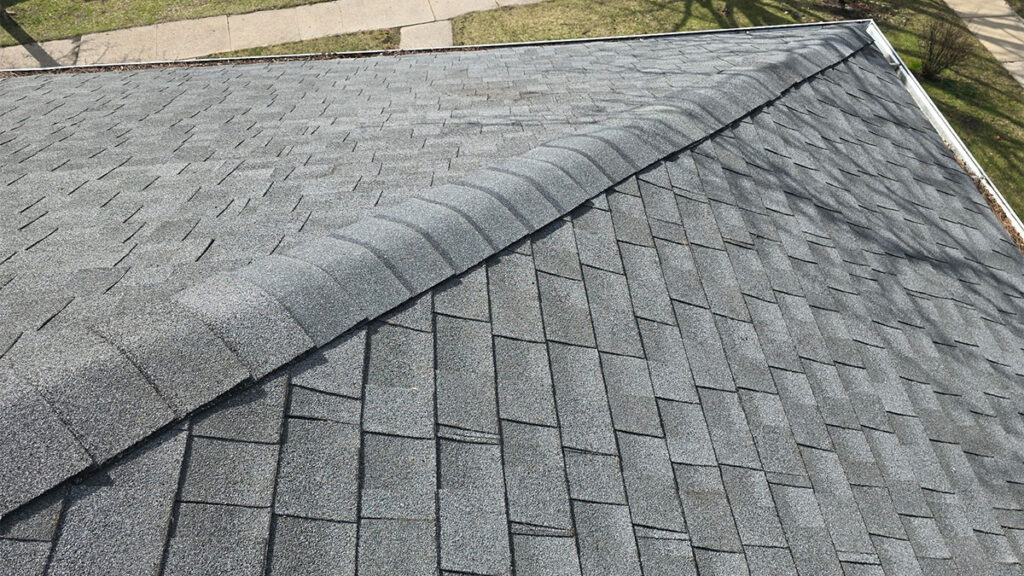
Visible shingle deterioration can provide useful clues about the condition of a roof. Curling shingles may indicate aging or prolonged exposure to weather. Cracked shingles can become more vulnerable to water intrusion and wind damage. Missing shingles leave exposed areas that may allow moisture to reach underlying roofing components.
A few damaged shingles may be repairable, but widespread deterioration can suggest that the roof is nearing the end of its service life. At Fox River Home Improvements, we can help assess the condition of your roof and determine whether repairs or replacement may be appropriate.
You Notice Granules in Gutters
As asphalt shingles age, they can lose some of the protective granules embedded in their surface. Finding a small amount of material in gutters does not automatically mean a roof needs replacement. However, a significant or increasing amount of granule loss can be a sign of aging shingles.
Granule loss should be considered alongside other indicators such as shingle condition, roof age, leaks, and overall deterioration. A roofing professional can assess whether the remaining roofing material is still providing adequate protection.
There Are Repeated Leaks
A leak does not automatically mean you need a new roof. Many leaks are caused by localized problems involving flashing, roof penetrations, damaged shingles, or other components that can be repaired.
The situation becomes more concerning when leaks continue to appear in different areas or return after previous repairs. Multiple recurring leaks can indicate that the roof’s overall condition has deteriorated. Instead of treating each leak as an isolated problem, homeowners should have the entire roofing system evaluated.
Water Damage Is Reaching the Interior
Visible ceiling stains, damp areas, peeling paint, or other signs of moisture can indicate that water is getting through the roofing system.
Interior water damage should be investigated promptly. A roof leak may be relatively small at the surface but can cause damage to insulation, decking, framing, or interior finishes if moisture continues to enter the building.
The presence of interior damage does not automatically mean replacement is necessary, but it increases the importance of identifying the source and determining the extent of the problem.
The Roof Decking Is Damaged
Roofing materials sit over a structural or supporting layer commonly referred to as roof decking. If water has repeatedly entered the roofing system, the decking may become damaged.
Soft, weakened, or deteriorated decking can be more serious than a surface-level shingle problem. Depending on the extent of the damage, sections of decking may need to be replaced during a roofing project. If deterioration is widespread, a more extensive roofing project may be necessary.
Storm Damage Is Extensive
Severe weather can cause significant roofing damage. High winds may remove shingles, while hail can damage roofing surfaces. Falling branches can puncture or break roofing materials.
Minor storm damage may be repairable. Extensive damage across large portions of the roof may require replacement.
After a major storm, homeowners should avoid making assumptions based solely on what they can see from the ground. A professional inspection can identify less obvious damage and determine the appropriate scope of work.
Repairs Are Becoming More Expensive
Cost is an important part of the roof repair vs replacement decision. A repair may be the most economical choice when the damage is limited and the roof has substantial useful life remaining.
However, if repair costs continue to accumulate while the roof is also approaching the end of its service life, replacement may provide greater long-term value. Homeowners should compare the immediate repair cost with the expected future maintenance requirements. The cheapest option today is not necessarily the least expensive option over several years.
Your Energy or Comfort Problems Have Increased
Roofing is one part of the home’s overall building envelope. While replacing a roof alone does not automatically solve every energy-efficiency problem, an aging or damaged roofing system can contribute to moisture and insulation issues.
During a replacement project, homeowners may have an opportunity to address underlying problems with ventilation, insulation, or other roofing components where appropriate. These considerations should be discussed with a qualified professional rather than assuming that a new roof alone will resolve indoor comfort issues.
How a Roofing Contractor Can Help
When the decision between repair and replacement is unclear, an inspection from an experienced roofing contractor can provide useful information. The contractor should assess the overall condition of the roofing materials, flashing, roof decking where accessible, penetrations, drainage areas, and other relevant components.
Ask the contractor to explain what problems were found and why a particular solution is recommended. If replacement is suggested, ask whether repair is still a reasonable alternative and what the likely future maintenance requirements would be. A clear explanation can help you understand whether the recommendation is based on isolated damage or broader deterioration.
Final Thoughts
Knowing when roof replacement is more appropriate than another repair can save homeowners from repeatedly addressing the same problems. Age, widespread shingle deterioration, recurring leaks, extensive storm damage, damaged decking, sagging areas, and increasing repair costs can all be signs that the existing roof may be reaching the end of its useful life.
The roof repair vs replacement decision should be based on the condition of the entire roofing system rather than one isolated problem. If you are unsure which option is right for your home, an experienced roofing contractor can inspect the roof, explain the issues, and help you understand the available solutions.
A well-informed decision can help protect your home, manage long-term maintenance costs, and ensure that your roofing system continues to perform as expected. Contact us today to schedule a professional roof inspection and discuss whether repair or replacement is the right option for your home.
Frequently Asked Questions
How do I know when roof repairs are no longer enough?
Frequent repairs, widespread shingle deterioration, recurring leaks, extensive storm damage, sagging areas, and an aging roof can indicate that replacement may be more appropriate than continued repairs.
Is roof repair or replacement better?
Neither option is automatically better. Repair is often appropriate for isolated problems, while replacement may make more sense when damage is widespread or the roof is nearing the end of its service life.
How often should a roof be replaced?
Roof lifespan varies depending on the roofing material, installation quality, weather exposure, maintenance, and other factors. A professional inspection can help determine the current condition of an aging roof.
Does a leaking roof always need to be replaced?
No. A localized leak caused by damaged flashing, a small area of damaged shingles, or another isolated issue may be repairable. Repeated or widespread leaks may indicate a larger problem.
Should I replace my roof if it is old but not leaking?
Not necessarily. An old roof that is still performing well may not require immediate replacement. However, an inspection can help identify deterioration that may not yet be causing visible leaks.
Related Posts