Wondering, 'Does homeowners insurance cover roof replacement?' Learn what damage is covered, common exclusions, and how to file a successful claim. Get a...
Roof Replacement Cost Explained
 What Homeowners Actually Pay (Materials, Labor, Timeline)
Roof replacement cost Wisconsin residents face varies based on many factors, such as pitch, materials, labor, logistics, roof size, and existing conditions. Understanding how much to replace the roof on WI homes can save you stress over budgeting and financing. This guide breaks down all the common cost components, including roofing estimate breakdown Fox River homeowners should expect when planning a roof project.
A complete roof replacement does more than protect your home from rain and snow. It improves energy efficiency, enhances curb appeal, increases property value, and can even affect insurance claims and warranties. Proper budgeting helps homeowners avoid unexpected costs and choose the roofing options that make the best long-term investment.
Why Roof Replacement Matters
Your roof is your home’s first line of defense against the elements. A failing roof can lead to leaks, structural damage, and mold growth if ignored. That’s why it’s essential to know the real cost behind roofing projects and how different elements affect your total outlay around the areas.
Planning ahead gives you leverage when negotiating with contractors, comparing materials such as asphalt shingles or premium options like Owens Corning and GAF systems, and understanding financing options or warranty coverage that protect your investment.
What Affects Roof Replacement Costs?
There are multiple factors that influence how much it costs to replace a roof. These variables determine the final pricing homeowners receive from contractors. Recognizing these components helps you make informed choices.
Roof Size and Pitch
The larger your roof, the more materials and labor are needed. Simple roof shapes with moderate pitches are easier to work on and cost less. Steeper or complex roofs require additional safety measures and more labor hours, increasing roof replacement cost Wisconsin homeowners will pay.
Roofers measure square feet in “squares” (100 square feet (about the area of an apartment bedroom) equals one square). More squares mean more shingles and underlayment, directly affecting material and labor costs.
Roofing Materials
Different materials come with different prices:
- Asphalt Shingles
Asphalt shingles remain popular due to affordability and durability. Options from manufacturers like Owens Corning and GAF come in various grades that influence lifespan and cost. - Synthetic and Composite Options
Composite shingles mimic slate or wood but provide improved durability without the high cost of natural materials.
Tear-Off vs Overlay
When replacing your roof, one major choice is whether to tear off the old roofing layers or overlay new shingles on top of existing ones.
Tear-Off
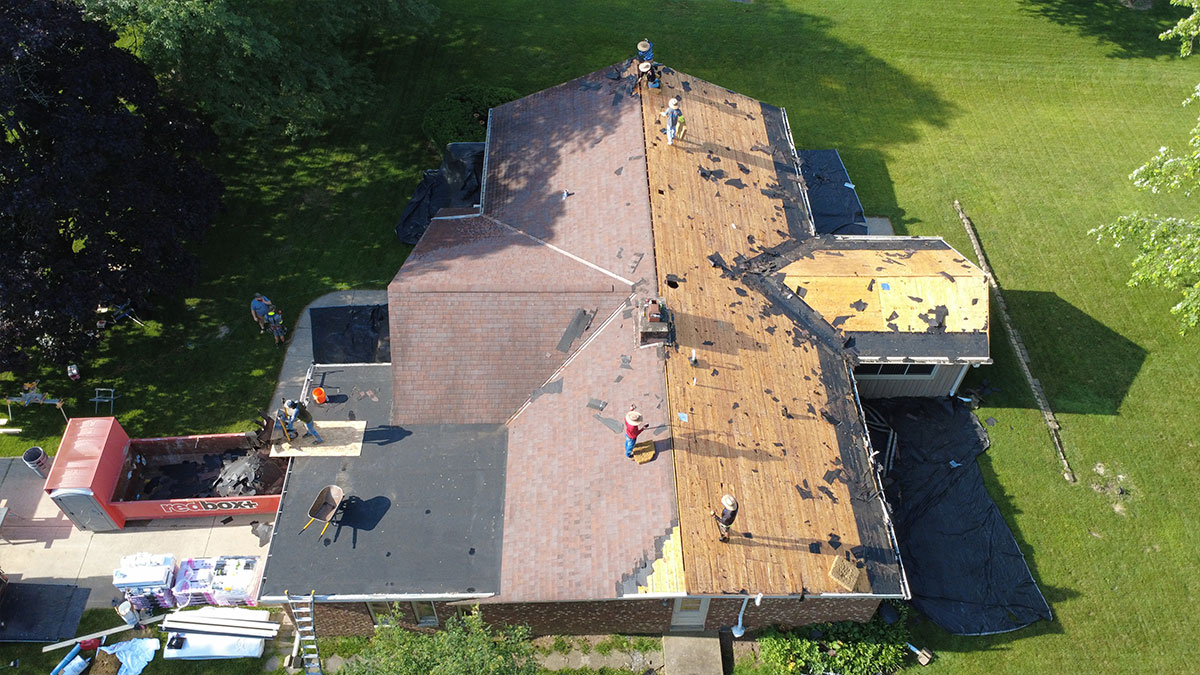
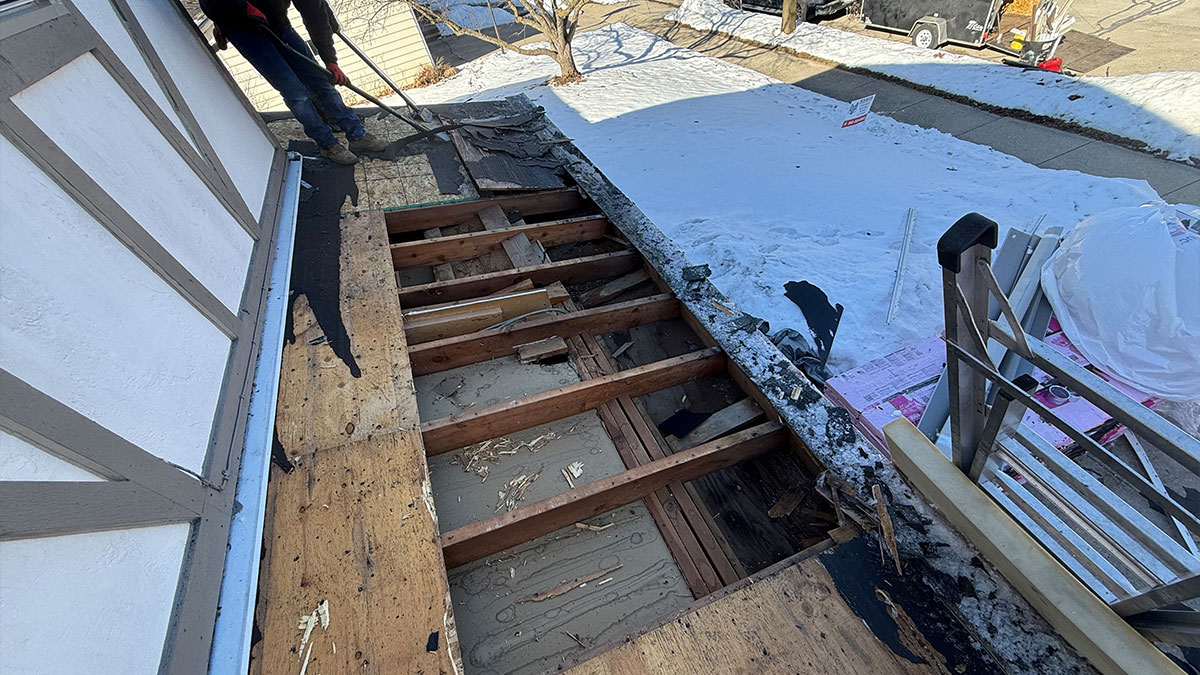
A full tear-off removes old materials down to the decking. This adds labor and disposal costs but ensures a clean base for new roofing.
Overlay
An overlay is cheaper because it avoids removal work. However, multiple shingle layers can reduce the lifespan of the new roof and hide underlying issues.
Permit Costs
Local regulations influence permit requirements. Permit costs vary by jurisdiction, and roofing contractors often include them in their estimates.
Ventilation and Insulation
Proper attic ventilation prevents heat and moisture buildup, increasing energy efficiency and roof longevity. Adding or upgrading ridge vents, soffit vents, or attic insulation may add to the initial roof replacement cost but yields long-term savings and fewer maintenance issues.
Decking Repair
During tear-off, contractors inspect the decking (the wood underneath shingles). Damaged or rotted decking must be replaced before new shingles go down. While this adds cost, ignoring decking issues can lead to faster roof failure.
Labor Costs
Labor costs make up a significant portion of replacement expenses. Experience, crew size, and seasonality (such as winter conditions that slow work) influence hourly rates and project timelines.
Insurance Claims and Financing Options
Homeowner insurance may contribute if storm damage or other covered events caused by roof damage. Filing a claim can reduce out-of-pocket costs, but policies differ in coverage and deductibles.
Financing options allow homeowners to spread the cost over time, and many roofing companies offer payment plans or collaborate with lenders. Understanding financing and insurance coverage helps you budget realistically.
Warranties and Manufacturer Backing
Roofing warranty coverage varies based on the materials and workmanship. Brands like Owens Corning and GAF offer extensive warranties that cover certain defects. Extended warranties may add upfront cost but provide peace of mind for future repairs.
Typical Roofing Cost Breakdown
Although prices vary, many homeowners in Wisconsin find that roofs fall into broad cost ranges based on materials, size, and labor. A basic asphalt shingle roof will cost less than premium materials or complex installations.
Depending on market rates and local demand, many roofing estimate breakdown Fox River area homeowners see includes:
- Material costs
- Removal and disposal of old roofing
- Permit fees
- Labor charges
- Ventilation and insulation upgrades
- Decking repairs if needed
- Warranty or manufacturer coverage
A detailed quote from a trusted contractor will itemize these elements so you understand exactly what you are paying for and why.
Timeline for Roof Replacement Projects
A typical roof replacement project advances in stages, and timeframes depend on complexity with Fox River Home Improvements.
Initial Inspection and Estimate
Roofers assess your current roof, measure the area, and check for hidden damage. They provide an estimate that breaks down materials, labor, and other costs for approval.
Permit Processing
Contractors or homeowners apply for necessary permits. Permit approval times vary by municipality but typically take a few days.
Material Delivery and Prep
Ordering materials and preparing the site for work usually follows permit approval.
Tear-Off and Repairs
The crew removes old roofing and repairs the decking as necessary. This is labor-intensive and may take a full day or more.
Installation
New roofing materials are installed once the base is ready. Asphalt shingle installations can often be completed in a day for standard homes, while metal or complex layouts take longer.
Cleanup and Inspection
After installation, crews perform a final cleanup and walk-through to ensure quality and address homeowner questions.
Overall, most residential roof replacements wrap up within one to five days, depending on size, weather, and repairs needed.
Preparing for Your Roofing Project
Preparation ensures smoother installation and fewer surprises.
Measure Your Expectations
Review your estimate carefully. Ask contractors to explain each line item in the roofing estimate breakdown Fox River crews provide.
Clear Surrounding Areas
Remove vehicles, outdoor furniture, and loose items from the yard to protect them during construction.
Protect Interior Items
Some homeowners cover furniture inside areas under construction to avoid dust settling due to vibrations or wind.
Conclusion
Roof replacement cost Wisconsin homeowners encounter varies widely based on materials, labor, roofing size, and additional repairs needed. A reliable roofing estimate breakdown Fox River professionals provide should clarify expenses related to shingle types, tear-off versus overlay, permit fees, ventilation updates, decking repair, and more.
Understanding these elements helps you build a realistic budget, navigate insurance claims, evaluate warranty options, and plan your project timeline. With proper planning and trusted roofing contractors, you can improve comfort, increase energy efficiency, and protect your home for decades.
Frequently asked questions
What factors influence roof replacement cost in Wisconsin?
Roof size, materials, labor, permit costs, ventilation, decking repairs, and warranty coverage all play roles in total cost.
Is tearing off the old roof always necessary?
Tear-off provides a clean base and is usually preferred, though some situations allow overlay. Tear-off ensures no hidden damage is trapped beneath new shingles.
Can insurance cover roof replacement?
If damage resulted from a covered event such as a storm, your homeowner’s insurance may cover part of the cost after deductible.
Are premium shingles worth the cost?
Premium shingles from brands like Owens Corning and GAF may cost more up front but offer longer lifespans, better protection, and stronger warranties.
How long does a full roof replacement take?
Most roof replacements complete within one to five days, depending on size, weather, and site conditions.
Related Posts