A roof does not usually go from being completely healthy to needing a full replacement…
Can My Roof Be Repaired Instead Of Replaced?
 For many homeowners, a leaking or damaged roof immediately brings to mind the high cost of a full replacement. However, the crucial question you should be asking is, can my roof be repaired instead of replaced? The answer is often yes, but it depends on a careful evaluation of several key factors. Consequently, understanding these variables can save you thousands of dollars and extend the life of your current roof. This guide will walk you through the decision-making process, helping you determine the most cost-effective and safest solution for your home.
What Are the Deciding Factors for Roof Repair vs. Replacement?
Deciding between a repair and a full replacement isn’t a simple guess. Importantly, it requires a professional assessment of your roof’s overall condition. Three primary factors will guide the final decision: the age of your roof, the extent of the damage, and the type of roofing materials used.
The Age of Your Roof
A roof’s lifespan varies significantly by material. For example, a standard asphalt shingle roof typically lasts 20-25 years. If your roof is approaching the end of its expected service life and showing signs of failure, a replacement is often the smarter financial choice. Pouring money into repairing an old roof can become a constant drain, whereas a new roof offers long-term peace of mind. In contrast, if your roof is only 5-10 years old, a targeted repair is almost always the more logical and economical path.
The Extent of the Damage
The scope of the problem is perhaps the most critical factor. A few missing shingles from a windstorm or a leak around a single vent pipe are ideal candidates for repair. These issues are typically localized and can be fixed without disturbing the rest of the roof. However, if the damage is widespread—affecting more than 30% of the roof’s surface—a replacement becomes a more practical solution. Widespread issues can indicate systemic failure, and patching one area may only cause another to fail shortly after.
Type of Roofing Material
Furthermore, the materials on your roof play a role. Some materials, like metal or slate, are easier to repair in sections than others. Asphalt shingles can also be replaced individually, but matching the color and weathering can be challenging on older roofs. If your home has multiple layers of shingles (a common practice in the past), repairing the bottom layer is often impossible without removing the top one, making replacement the only viable option.
Key Indicators: Can My Roof Be Repaired Instead of Replaced?
When an expert inspects your roof, they look for specific signs to determine if a repair is sufficient. The answer to the question, can my roof be repaired instead of replaced?, often lies in the type and severity of these indicators. A repair is generally feasible if you’re dealing with isolated problems.
Common issues that can typically be repaired include:
- Minor Leaks: A small, contained leak, especially around flashing, vents, or chimneys, can usually be sealed and repaired effectively.
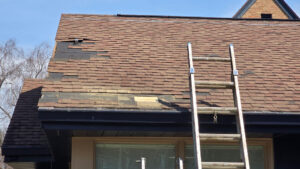
- Missing or Damaged Shingles: If a handful of shingles are cracked, curled, or have blown off in a storm, a roofer can replace just the affected ones.
- Damaged Flashing: Flashing is the metal stripping that protects joints and valleys. If it’s rusted or has come loose, it can be repaired or replaced to prevent water intrusion.
- Granule Loss in One Area: If you notice shingle granules in your gutters from one specific section of the roof, it may indicate localized damage that can be addressed with a repair.
When a Full Roof Replacement is Unavoidable
While repairs are preferable for your budget, sometimes a replacement is the only responsible choice for protecting your home. Ignoring the need for a new roof can lead to catastrophic water damage, mold growth, and structural rot. Therefore, it’s crucial to recognize the clear signs that a replacement is necessary.
Consider a full replacement if you observe the following:
- Widespread Curling or Buckling Shingles: When the majority of your shingles are losing their shape, it’s a sign of advanced age and widespread failure.
- Bald Spots and Significant Granule Loss: Shingles that have lost most of their granules are no longer protecting your home from UV rays and moisture.
- A Spongy or Soft Roof Deck: If walking on your roof feels like stepping on a trampoline, it indicates the underlying wood decking is likely saturated with moisture and rotting. This is a serious structural concern.
- Old Age: As mentioned, if your asphalt shingle roof is over 20 years old, it’s living on borrowed time. Proactively replacing it is a better long-term investment than waiting for it to fail.
Ultimately, a professional assessment is the best way to make an informed decision. An experienced contractor can provide a detailed analysis and help you weigh the pros and cons. For more information on industry standards, the National Roofing Contractors Association is an excellent resource.
Final Thoughts: Making the Right Choice for Your Home
So, can my roof be repaired instead of replaced? For isolated, minor damage on a relatively young roof, the answer is a resounding yes. A well-executed repair can effectively stop a problem in its tracks and extend your roof’s lifespan. However, for older roofs or those with extensive, systemic issues, a full replacement is the wisest and safest investment. It protects your home’s structure and value for decades to come.
The most reliable way to get a definitive answer is to schedule a comprehensive professional roof inspection. An expert can assess the specific conditions and provide a clear recommendation based on facts, not guesswork. Proper maintenance and timely action, whether repair or replacement, are key to ensuring your roof performs as it should, protecting you and your family from the elements. As a result, you can have confidence in the integrity of your home, especially after severe weather events, a topic covered by organizations like FEMA.
Related Posts