Learn how often should I have my chimney cleaned to prevent fires. Annual inspections are recommended to remove dangerous creosote. Contact us for a quote!
What Is Creosote?
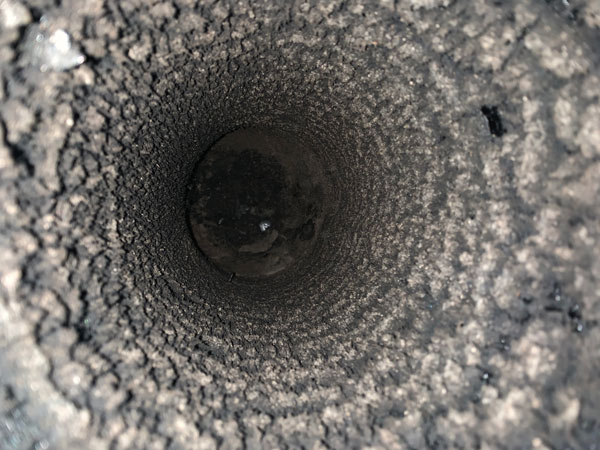 If you own a home with a wood-burning fireplace or stove, you’ve likely heard the term, but you may still be asking, what is creosote? In short, it’s a highly flammable, tar-like substance that builds up inside your chimney flue with every fire you enjoy. Consequently, understanding its properties and dangers is not just a matter of maintenance—it’s a critical component of home safety. This guide will break down what it is, how it forms, and what you must do to prevent it from becoming a serious threat.
What is Creosote and How Does it Form?
Creosote is an unavoidable byproduct of burning wood. Specifically, when wood burns, it releases smoke containing various unburned particles, gases, and moisture. As this smoke travels up your cooler chimney, these components condense and stick to the interior walls of the flue, forming a deposit. Therefore, every fire contributes a little more to this buildup.
Several factors can accelerate its formation. For example, burning unseasoned or “green” wood, which has high moisture content, produces cooler, smokier fires. Additionally, restricted airflow from keeping your damper partially closed or having an improperly sized flue can also lead to more significant accumulation. The cooler the flue temperature, the more condensation and buildup will occur.
The Three Stages of Creosote Buildup
Not all creosote is the same. Professionals classify it into three distinct stages, each more dangerous and difficult to remove than the last. Identifying the stage of buildup in your chimney is crucial for determining the right course of action.
Stage 1: Flaky Soot
The first stage is mostly composed of loose, flaky soot. It has a dusty appearance and is the easiest to remove. A standard chimney brush can typically handle Stage 1 creosote with relative ease. However, even this light buildup is flammable and should be addressed with regular cleanings.
Stage 2: Crunchy and Tar-Like
As the buildup continues, it progresses to Stage 2. This form looks like black, crunchy, or tar-like flakes. It is harder and more concentrated than Stage 1 soot. Furthermore, removing Stage 2 creosote often requires more specialized tools, such as rotary loop systems, as standard brushes may not be effective enough.
Stage 3: Glazed and Concentrated
Stage 3 is the most dangerous form. It appears as a thick, hard, and shiny glaze that has been baked onto the chimney flue. This type of creosote is extremely concentrated, dense, and highly flammable. Importantly, it cannot be removed with brushes or basic tools. Stage 3 often requires powerful chemical treatments or specialized mechanical equipment, and in severe cases, may even necessitate a new chimney liner as it can damage the flue itself.
The Dangers of Creosote Accumulation
The primary danger of creosote is its extreme flammability. A thick layer of buildup provides the perfect fuel for a chimney fire. These fires can reach temperatures of over 2,000°F, which is hot enough to crack masonry, damage the chimney structure, and ignite nearby combustible materials in your home’s walls and roof.
Moreover, a chimney fire can be a violent event, often described as sounding like a freight train or a low-flying jet. Even if a chimney fire doesn’t spread to the rest of the house, it can cause significant damage to the chimney itself, making it unsafe for future use until it is professionally inspected and repaired. For this reason, preventing the conditions for a chimney fire is paramount. You can learn more about chimney safety and maintenance to protect your home.
How to Prevent Creosote Buildup
While you can’t completely stop creosote from forming, you can take several steps to minimize its accumulation and reduce your risk. Prevention is always the best strategy for chimney safety. Following these best practices will significantly slow the rate of buildup.
- Burn Seasoned Hardwoods: Only burn dry, seasoned hardwoods like oak or maple. Wood should be seasoned for at least six to twelve months to reduce its moisture content.
- Ensure Proper Airflow: Keep the fireplace damper fully open when a fire is burning to allow smoke to escape quickly and keep flue temperatures higher.
- Build Hot, Smaller Fires: Hot, bright fires burn more completely and produce less smoke and, therefore, less creosote than smoldering, slow-burning fires.
- Install a Quality Chimney Cap: A cap helps prevent rain and animal nesting, both of which can obstruct the flue and worsen buildup.
- Schedule Regular Inspections: The most critical step is to have your chimney inspected annually by a certified professional. They can tell you how often your chimney needs sweeping.
Adhering to these practices is essential. For homeowners wondering about the risks, the Chimney Safety Institute of America (CSIA) provides extensive resources on safe wood-burning practices. A professional can also assess your specific setup and provide tailored advice.
The Importance of Professional Cleaning
Attempting to remove significant creosote buildup on your own can be ineffective and dangerous. A professional chimney cleaning service has the training, experience, and specialized equipment to do the job safely and thoroughly. They can identify the stage of your creosote and use the appropriate method for removal.
During an inspection, a professional will also check for any damage to your chimney’s structure, liner, or components that you might miss. This comprehensive approach ensures your entire chimney system is safe for operation. The EPA’s Burn Wise program also emphasizes the importance of professional maintenance for efficiency and safety. So, if you’re still asking yourself “what is creosote?“, the most important answer is that it’s a problem best left to the experts.
Key Takeaways on Creosote Safety
Ultimately, managing creosote is a non-negotiable responsibility for anyone with a wood-burning appliance. It is a flammable byproduct that poses a real threat if left unchecked. Remember that hot, clean fires with dry wood produce less buildup, but they do not eliminate it entirely.
Therefore, the single most effective action you can take is to schedule an annual chimney inspection and cleaning with a certified professional. This proactive step not only removes the dangerous substance but also provides peace of mind, ensuring your fireplace remains a source of warmth and comfort, not a hazard. For comprehensive chimney services, it’s always best to consult with a trusted contractor.
Related Posts