Learn how often should I have my chimney cleaned to prevent fires. Annual inspections are recommended to remove dangerous creosote. Contact us for a quote!
Caps Vs Crowns
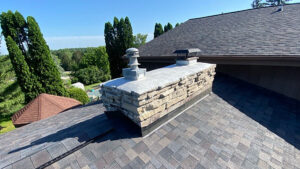 Many homeowners find the terminology surrounding chimney components confusing, especially when it comes to the topic of CAPS VS CROWNS (CHIMNEY). While they sound similar and are located in the same general area, they serve distinct and equally vital roles in protecting your chimney and home from damage. Understanding the difference is the first step toward effective maintenance and preventing costly repairs down the line. Consequently, this guide will break down exactly what each component is, what it does, and why you need both to be in excellent condition.
What is a Chimney Crown?
A chimney crown is the concrete or masonry slab at the very top of your chimney’s brick structure. Its primary job is to protect the masonry below it from water damage. Think of it as the roof of your chimney. Specifically, it’s designed with a slight slope to shed water away from the flue opening and prevent it from seeping into the bricks and mortar. Without a properly constructed crown, water would penetrate the chimney, leading to deterioration, cracks, and potential structural failure.
Material and Construction of Crowns
Traditionally, crowns are made from a standard mortar mix, but this is often a point of failure. Mortar is not as durable or waterproof as concrete and tends to crack over time. For this reason, a high-quality crown should be constructed from cast-in-place concrete, which offers superior strength and longevity. Furthermore, a well-built crown should extend past the chimney’s vertical walls by at least two inches, creating a drip edge that directs water away from the brick face, preventing staining and moisture absorption.
Understanding the Role of a Chimney Cap
While the crown protects the chimney structure itself, the chimney cap protects the flue opening. A chimney cap is a metal covering, usually made of stainless steel or copper, that sits directly over the top of the flue pipe. Its function is multi-faceted and absolutely essential for a safe and efficient chimney system.
Functions and Types of Caps
A chimney cap serves several critical purposes. First, it acts as a rain guard, preventing water from pouring directly down your flue, which can damage the liner, damper, and fireplace interior. Secondly, it features a mesh screen that keeps animals like birds, squirrels, and raccoons from nesting inside your chimney. This mesh also functions as a spark arrestor, stopping hot embers from landing on your roof or nearby combustible materials. For example, without a cap, a simple spark could lead to a devastating house fire. You can learn more about the importance of proper chimney safety and maintenance to keep your home protected.
Key Differences: CAPS VS CROWNS (CHIMNEY)
To avoid any lingering confusion, it’s helpful to directly compare the two components. The ongoing discussion of CAPS VS CROWNS (CHIMNEY) becomes much clearer when you see their distinct roles. While both are crucial for water protection, they operate at different levels and protect different parts of the system. Importantly, a chimney needs both a functional crown and a functional cap to be fully protected.
- Location: The crown is the concrete slab covering the top surface of the masonry chimney structure. The cap is the metal cover sitting directly on top of the flue pipe that extends through the crown.
- Function: A crown’s main purpose is to shed water away from the chimney’s masonry. A cap’s main purpose is to keep water, debris, and animals out of the flue itself.
- Material: Crowns are typically made of concrete or masonry. Caps are almost always made of metal, such as stainless steel, galvanized steel, or copper.
- Protection Scope: The crown protects the chimney’s structural integrity from the top down. The cap protects the chimney’s interior flue system and your home from external elements and fire hazards.
What Happens if a Chimney Crown Fails?
A failed chimney crown is a serious issue. When cracks develop, water begins to seep into the porous brick and mortar of the chimney structure. In colder climates, this water freezes and expands—a process known as the freeze-thaw cycle. As a result, this cycle can cause spalling (flaking bricks), larger cracks, and eventually compromise the entire chimney’s structural stability. If left unaddressed, this damage can become so severe that it requires a complete rebuild, which is significantly more expensive than a crown repair. Understanding the costs associated with a full chimney rebuild can motivate any homeowner to address crown issues promptly.
Moreover, water that gets past the crown can also damage internal components. It can rust out the damper assembly and saturate the back wall of your firebox. In addition, moisture inside the chimney can create an environment for mold growth, which poses a health risk. Therefore, regular inspection of your chimney crown is vital, as recommended by the Chimney Safety Institute of America (CSIA).
Why Combining Services Makes Sense
Since the roof and chimney are so closely integrated, addressing issues with one often involves the other. For instance, proper flashing where the chimney meets the roof is critical for preventing leaks. When you’re having your chimney inspected or repaired, it’s a perfect opportunity to have your roof checked as well. In fact, combining roofing and chimney services can save you time and money by addressing all potential water entry points in a single project with one trusted contractor.
Similarly, a damaged cap or crown can have cascading effects. A missing cap can lead to a deteriorated flue liner, which is another critical safety component. A properly installed liner is essential for guiding combustion byproducts safely out of the home, as outlined by the National Fire Protection Association (NFPA). Ensuring your entire system, from the cap down to the liner, is in good shape is paramount. If you suspect issues, it’s wise to investigate options for protecting your chimney liner.
Final Thoughts: A Two-Part System for Total Protection
Ultimately, the debate of CAPS VS CROWNS (CHIMNEY) is not about choosing one over the other. A fully protected chimney requires both a solid, waterproof crown and a secure, well-fitted cap. The crown shields the masonry structure, while the cap guards the flue opening. Neglecting either component leaves your home vulnerable to water damage, animal intrusion, and fire hazards. Regular inspections are the best way to ensure both your cap and crown are performing their duties, safeguarding your investment for years to come.
Related Posts